Island atlas · Landscapes & species
Babuyan Claro
1 species records name Babuyan Claro. Explore their natural history, taxonomic history and distribution sources.
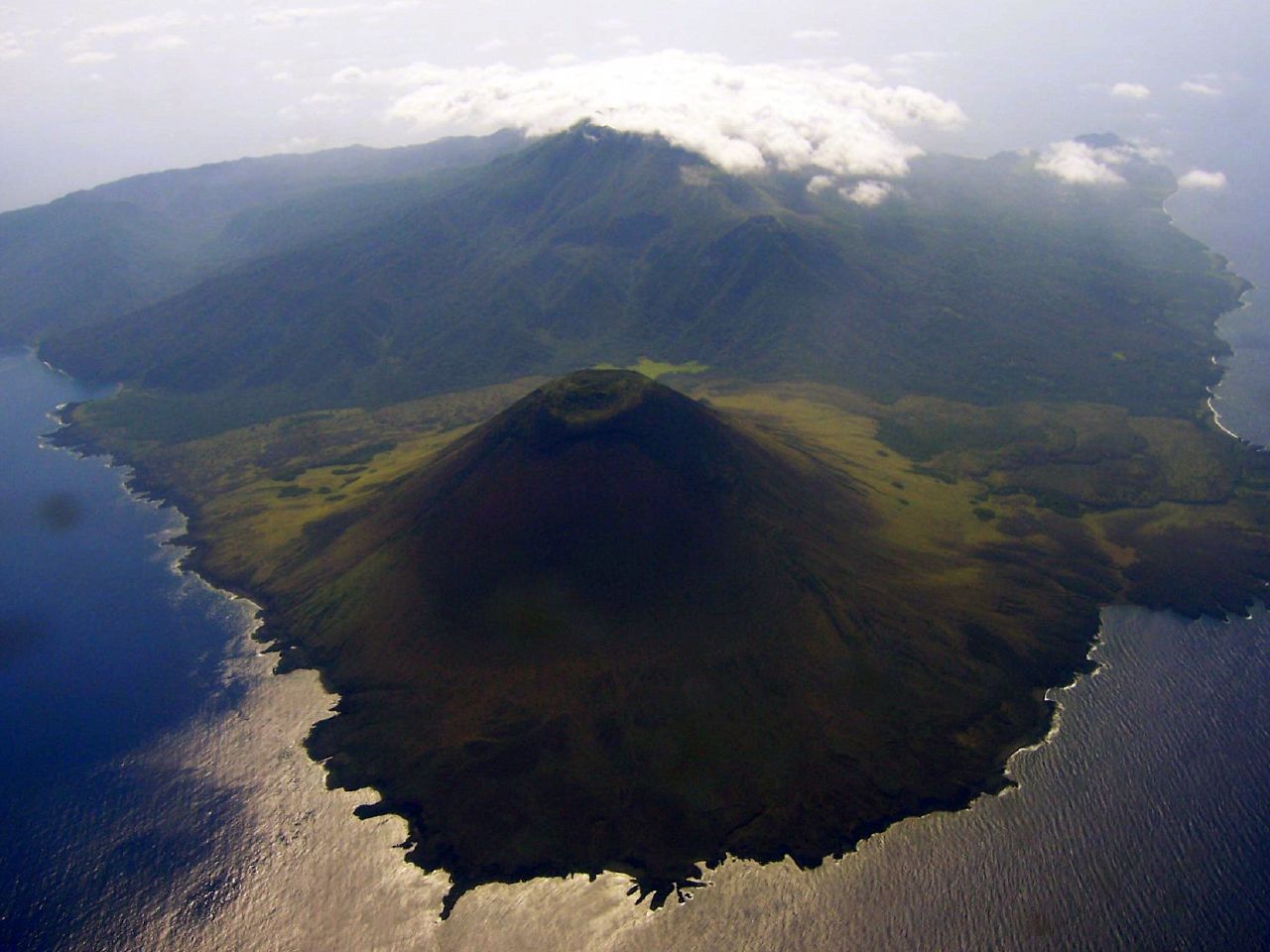
The volcanic cone of Smith Volcano on Babuyan Claro.
Photo: Bing Ramos · Original photograph · CC BY 2.0. Displayed to fit the frame.
Beyond the species list
A sense of place.
Babuyan Claro, also called Babuyan Island, is a volcanic island north of Luzon. It belongs to the Babuyan group and the municipality of Calayan in Cagayan. Its roughly triangular outline encloses some of the highest ground in the group.
Landscape & habitats
Steep shores and volcanic relief dominate this compact island. Smith Volcano forms a conspicuous cone, while rocky coastal sections and an offshore reef add a contrasting marine edge to the landscape.
Geographic sources
Geographic overview checked 7 October 2026. The photograph illustrates a landscape, not a snake observation.
Islands, barriers & evolution
Zoogeography
Babuyan endemism at the scale of one island
Babuyan Claro illustrates how a small island can support a distinctive evolutionary lineage. Northern Philippine gecko research recognised its population as Gekko crombota, separate from populations on neighbouring islands.
The important zoogeographic unit here is the individual island within the isolated Babuyan group. Shared regional affinities and island-restricted lineages coexist; neither proximity to Luzon nor a group-level label is sufficient evidence of a snake’s presence.
How to read the historical island groups
During Pleistocene glacial periods, lower sea levels exposed shallow seabeds and joined some present-day islands. Biogeographers call these reconstructed landmasses Pleistocene Aggregate Island Complexes (PAICs). Deep channels continued to separate others. This model helps explain regional similarities, but dispersal, older geology and habitat differences also shaped each fauna.
“Endemic” means restricted to a stated area; a Philippine endemic need not be confined to one island. The account above summarises published regional and local research. It does not add occurrences to the snake index below.
Regional framework: Meneses et al. (2024) ↗Zoogeographic sources · 2
- Brown et al. · Phylogeny of northern Philippine Gekko ↗Author-hosted account of island-specific gecko lineages in Babuyan and Batanes.
- Meneses et al. (2024) · Philippine herpetology, 20 years on ↗Regional framework, Fig. 1; isolation and research gaps. Open-access review, CC0.
Literature checked 7 October 2026. Survey results refer to the dates and areas studied.
Source-backed index
1 species
These are explicit source mentions, not a complete island richness estimate. Fine localities and habitat associations remain separate evidence claims.
A source naming Babuyan Claro does not establish occurrence in every municipality, protected area, or habitat on the island.