Island atlas · Landscapes & species
Jolo
8 species records name Jolo. Explore their natural history, taxonomic history and distribution sources.
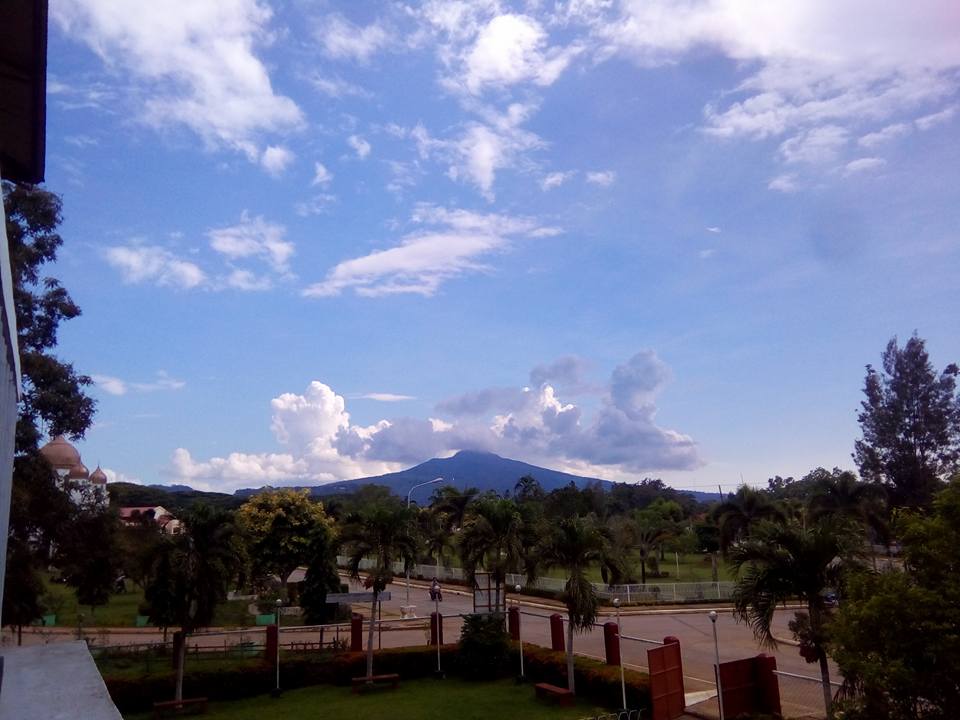
Bud Dajo on Jolo Island, viewed from the National Museum in Jolo.
Photo: Icefirexd · Original photograph · CC BY-SA 4.0. Displayed to fit the frame.
Beyond the species list
A sense of place.
Jolo is the principal island of Sulu province, within the chain of islands between Mindanao and Borneo. The town of Jolo is a settlement on the island, rather than the name of the whole archipelago.
Landscape & habitats
Volcanic cones and craters are characteristic landforms. Bud Dajo, pictured above, is a conspicuous cinder cone and one example of the relief that rises above the island’s lower ground.
Geographic sources
Geographic overview checked 7 October 2026. The photograph illustrates a landscape, not a snake observation.
Islands, barriers & evolution
Zoogeography
A poorly resolved Sulu island fauna
Jolo lies within the Sulu chain between Mindanao and Borneo, a setting of considerable interest for animal dispersal and regional affinities. It is nevertheless one of the conspicuous gaps in modern Philippine herpetology.
The 2024 review notes limited recent fieldwork and the loss of important historical specimens during World War II. Those gaps make confident reconstructions difficult. Island-specific evidence is particularly important here; neither a Bornean affinity nor a record from another Sulu island proves occurrence on Jolo.
How to read the historical island groups
During Pleistocene glacial periods, lower sea levels exposed shallow seabeds and joined some present-day islands. Biogeographers call these reconstructed landmasses Pleistocene Aggregate Island Complexes (PAICs). Deep channels continued to separate others. This model helps explain regional similarities, but dispersal, older geology and habitat differences also shaped each fauna.
“Endemic” means restricted to a stated area; a Philippine endemic need not be confined to one island. The account above summarises published regional and local research. It does not add occurrences to the snake index below.
Regional framework: Meneses et al. (2024) ↗Zoogeographic sources · 1
- Meneses et al. (2024) · Philippine herpetology, 20 years on ↗Regional framework, Fig. 1; isolation and research gaps. Open-access review, CC0.
Literature checked 7 October 2026. Survey results refer to the dates and areas studied.
Source-backed index
8 species
These are explicit source mentions, not a complete island richness estimate. Fine localities and habitat associations remain separate evidence claims.
Calamaria joloensis
TAYLOR 1922
Calliophis suluensis
(STEINDACHNER 1891)
Coelognathus erythrurus
(DUMÉRIL, BIBRON & DUMÉRIL 1854)
Hydrophis platurus
(LINNAEUS 1766)
Oligodon meyerinkii
(STEINDACHNER 1891)
Psammodynastes pulverulentus
(BOIE 1827)
Trimeresurus flavomaculatus
(GRAY 1842)
Tropidolaemus subannulatus
(GRAY 1842)
A source naming Jolo does not establish occurrence in every municipality, protected area, or habitat on the island.