Island atlas · Landscapes & species
Calamian
9 species records name Calamian. Explore their natural history, taxonomic history and distribution sources.
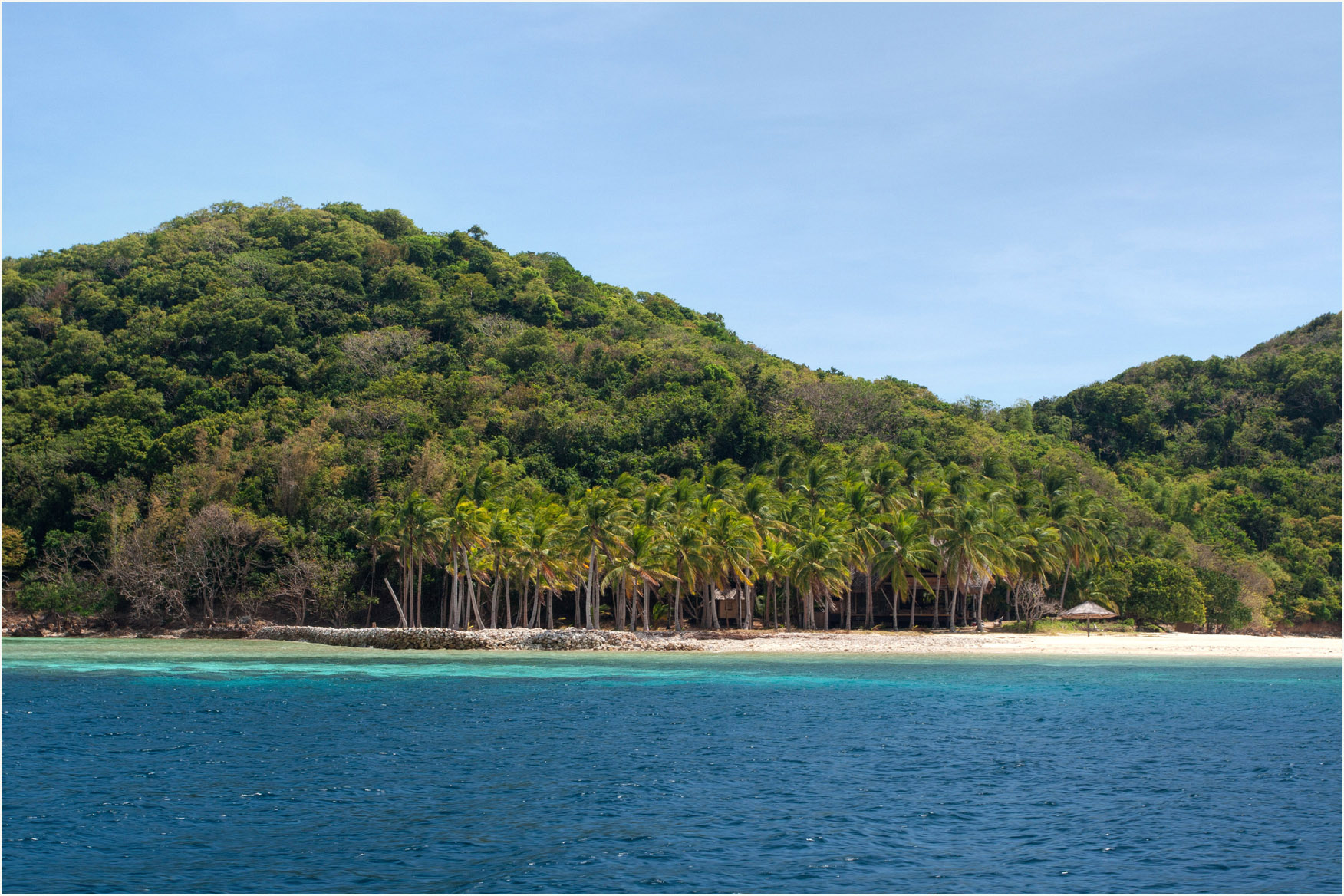
Calipipit Island, a small member of the Calamian group.
Photo: Tuderna · Original photograph · CC BY 3.0. Displayed to fit the frame.
Beyond the species list
A sense of place.
The Calamian Islands, also called the Calamianes, include Busuanga, Coron, Culion, Linapacan and numerous smaller islands. They form a varied island landscape in northern Palawan province.
Landscape & habitats
The group combines the mountain-and-valley terrain of Busuanga with the rugged limestone scenery of Coron and the smaller coastal islands between them. The photograph of Calipipit illustrates one small part of that larger marine setting.
A group-level Calamian record does not establish occurrence on every island in the group.
Geographic sources
Geographic overview checked 7 October 2026. The photograph illustrates a landscape, not a snake observation.
Islands, barriers & evolution
Zoogeography
An island group within Greater Palawan
The Calamian Islands occupy the northern portion of the Palawan faunal region. Reconstructed low-sea-level shorelines place them within a much larger island complex than the separate islands seen today.
This history provides a basis for comparing their animals with those of Palawan. It does not erase differences between Busuanga, Coron, Culion and smaller islands. A group-wide catalogue is the combined evidence for a region, not a checklist guaranteed to apply to each island.
How to read the historical island groups
During Pleistocene glacial periods, lower sea levels exposed shallow seabeds and joined some present-day islands. Biogeographers call these reconstructed landmasses Pleistocene Aggregate Island Complexes (PAICs). Deep channels continued to separate others. This model helps explain regional similarities, but dispersal, older geology and habitat differences also shaped each fauna.
“Endemic” means restricted to a stated area; a Philippine endemic need not be confined to one island. The account above summarises published regional and local research. It does not add occurrences to the snake index below.
Regional framework: Meneses et al. (2024) ↗Zoogeographic sources · 2
- Meneses et al. (2024) · Philippine herpetology, 20 years on ↗Regional framework, Fig. 1; isolation and research gaps. Open-access review, CC0.
- Esselstyn, Widmann & Heaney (2004) · The mammals of Palawan Island ↗Palawan faunal-region context and the uncertainty of past connections with Borneo.
Literature checked 7 October 2026. Survey results refer to the dates and areas studied.
Source-backed index
9 species
These are explicit source mentions, not a complete island richness estimate. Fine localities and habitat associations remain separate evidence claims.
Acrochordus granulatus
(SCHNEIDER 1799)
Ahaetulla prasina
(BOIE 1827)
Calliophis bilineatus
(PETERS 1881)
Coelognathus erythrurus
(DUMÉRIL, BIBRON & DUMÉRIL 1854)
Indotyphlops braminus
(DAUDIN 1803)
Liopeltis philippina
(BOETTGER 1897)
Malayopython reticulatus
(SCHNEIDER 1801)
Naja sumatrana
MÜLLER 1887
Oligodon notospilus
GÜNTHER 1873
A source naming Calamian does not establish occurrence in every municipality, protected area, or habitat on the island.