Island atlas · Landscapes & species
Masbate
5 species records name Masbate. Explore their natural history, taxonomic history and distribution sources.
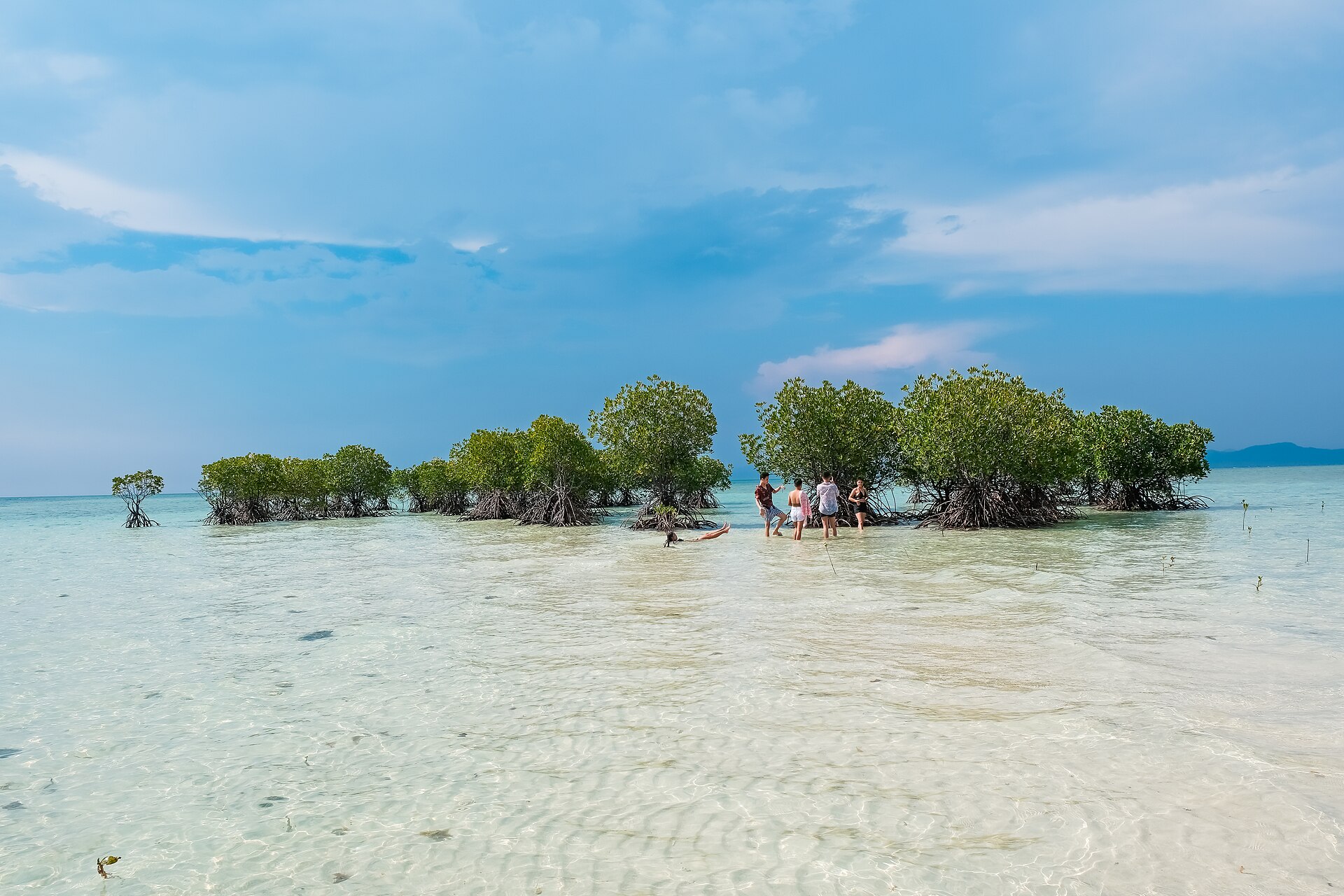
Buntod Reef Marine Sanctuary and its sandbar, just off Masbate City on the main island’s coast.
Photo: Bert Andone · Original photograph · CC BY-SA 4.0. Displayed to fit the frame.
Beyond the species list
A sense of place.
Masbate is the largest of the three main islands of Masbate province; Ticao and Burias are separate islands. Masbate City lies on the main island and is its principal urban settlement.
Landscape & habitats
Rolling grasslands and pasture are a distinctive part of the inland landscape. Offshore, Buntod Reef beside Masbate City provides a contrasting coastal scene of shallow water, sandbar and mangrove vegetation. These inland and marine environments should be distinguished when interpreting local records.
Geographic sources
- Masbate Island — island identity ↗
- Coastal Resource Management Project — Masbate landscapes ↗
- Buntod Reef — photographic record ↗
Geographic overview checked 7 October 2026. The photograph illustrates a landscape, not a snake observation.
Islands, barriers & evolution
Zoogeography
The northern West Visayan island complex
Masbate belongs to the Greater Negros–Panay, or West Visayan, historical island complex. In reconstructions of lower sea levels, its relationship to the other islands of that complex is more apparent than on a modern coastline map.
This helps frame comparisons with Panay, Negros and Cebu rather than relying on the nearest visible coast alone. The 2024 review also shows how new distribution records continue to improve knowledge of Masbate; present catalogue coverage should not be confused with a final measure of its diversity.
How to read the historical island groups
During Pleistocene glacial periods, lower sea levels exposed shallow seabeds and joined some present-day islands. Biogeographers call these reconstructed landmasses Pleistocene Aggregate Island Complexes (PAICs). Deep channels continued to separate others. This model helps explain regional similarities, but dispersal, older geology and habitat differences also shaped each fauna.
“Endemic” means restricted to a stated area; a Philippine endemic need not be confined to one island. The account above summarises published regional and local research. It does not add occurrences to the snake index below.
Regional framework: Meneses et al. (2024) ↗Zoogeographic sources · 2
- Sánchez-González, Hosner & Moyle (2015) · Genetic differentiation in Philippine lowland forest birds ↗Greater Luzon and Negros–Panay island membership; bird evidence illustrates variation within regions, not snake occurrences.
- Meneses et al. (2024) · Philippine herpetology, 20 years on ↗Regional framework, Fig. 1; isolation and research gaps. Open-access review, CC0.
Literature checked 7 October 2026. Survey results refer to the dates and areas studied.
Source-backed index
5 species
These are explicit source mentions, not a complete island richness estimate. Fine localities and habitat associations remain separate evidence claims.
Dendrelaphis fuliginosus
GRIFFIN 1909
Dendrelaphis marenae
VOGEL & VAN ROOIJEN 2008
Lycodon capucinus
BOIE 1827
Naja philippinensis
TAYLOR 1922
Tropidonophis negrosensis
(TAYLOR 1917)
A source naming Masbate does not establish occurrence in every municipality, protected area, or habitat on the island.