Island atlas · Landscapes & species
Sibuyan
3 species records name Sibuyan. Explore their natural history, taxonomic history and distribution sources.
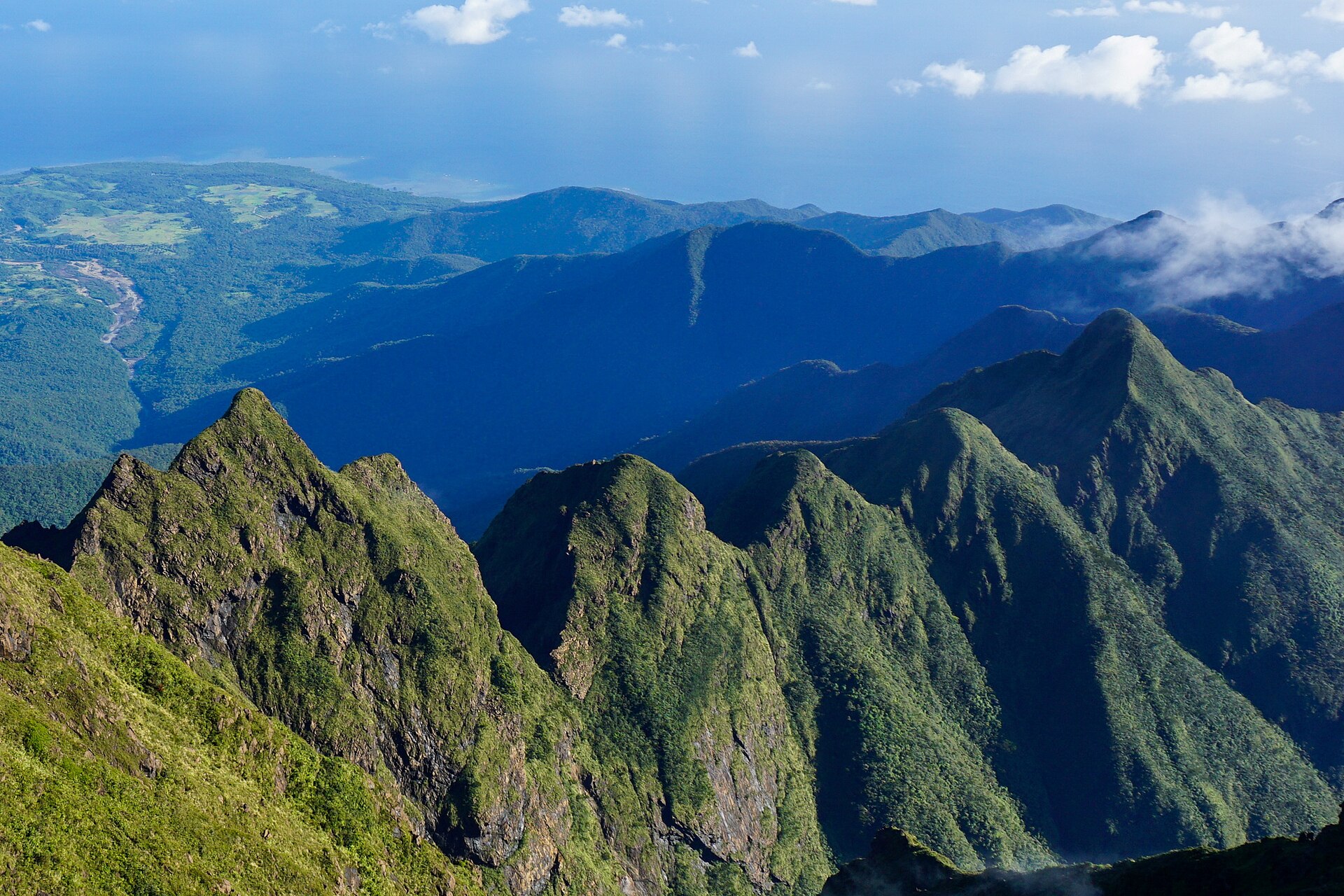
The jagged summit ridge of Mount Guiting-Guiting on Sibuyan.
Photo: Androkoy · Original photograph · CC BY-SA 4.0. Displayed to fit the frame.
Beyond the species list
A sense of place.
Sibuyan is a crescent-shaped island in the sea of the same name. It is a separate landmass from both Romblon Island and Tablas. Mount Guiting-Guiting dominates its relief.
Landscape & habitats
Guiting-Guiting’s sharply serrated ridge gives the mountain its distinctive appearance. Steep slopes support forest, producing a strong transition from the lower parts of the island to its rugged interior. The summit photograph shows the relief behind the mountain’s saw-toothed name.
Geographic sources
Geographic overview checked 7 October 2026. The photograph illustrates a landscape, not a snake observation.
Islands, barriers & evolution
Zoogeography
Deep-water isolation and a mountain fauna
Sibuyan is separated from neighbouring islands by deep water and remained isolated through the Pleistocene. This differs sharply from the shallower Romblon–Tablas connection; the three islands should not be treated as one former landmass.
A ridge-to-reef survey published in 2022 sampled habitats from low elevations into the mountains and added island records. Sibuyan illustrates how long isolation and environmental variation can occur together, supporting a distinctive fauna while leaving diversity still to be documented.
How to read the historical island groups
During Pleistocene glacial periods, lower sea levels exposed shallow seabeds and joined some present-day islands. Biogeographers call these reconstructed landmasses Pleistocene Aggregate Island Complexes (PAICs). Deep channels continued to separate others. This model helps explain regional similarities, but dispersal, older geology and habitat differences also shaped each fauna.
“Endemic” means restricted to a stated area; a Philippine endemic need not be confined to one island. The account above summarises published regional and local research. It does not add occurrences to the snake index below.
Regional framework: Meneses et al. (2024) ↗Zoogeographic sources · 2
- Meneses et al. (2022) · Ridge-to-reef amphibian and reptile diversity on Sibuyan ↗Deep-water isolation of Sibuyan; shallow separation of Romblon and Tablas; elevational field survey.
- Siler et al. (2012) · Comprehensive herpetofaunal inventory of the Romblon Island Group ↗Distinct island assemblages and geographically restricted species within the group.
Literature checked 7 October 2026. Survey results refer to the dates and areas studied.
Source-backed index
3 species
These are explicit source mentions, not a complete island richness estimate. Fine localities and habitat associations remain separate evidence claims.
Coelognathus erythrurus
(DUMÉRIL, BIBRON & DUMÉRIL 1854)
Dryophiops philippina
BOULENGER 1896
Laticauda colubrina
(SCHNEIDER 1799)
A source naming Sibuyan does not establish occurrence in every municipality, protected area, or habitat on the island.