Island atlas · Landscapes & species
Polillo
16 species records name Polillo. Explore their natural history, taxonomic history and distribution sources.
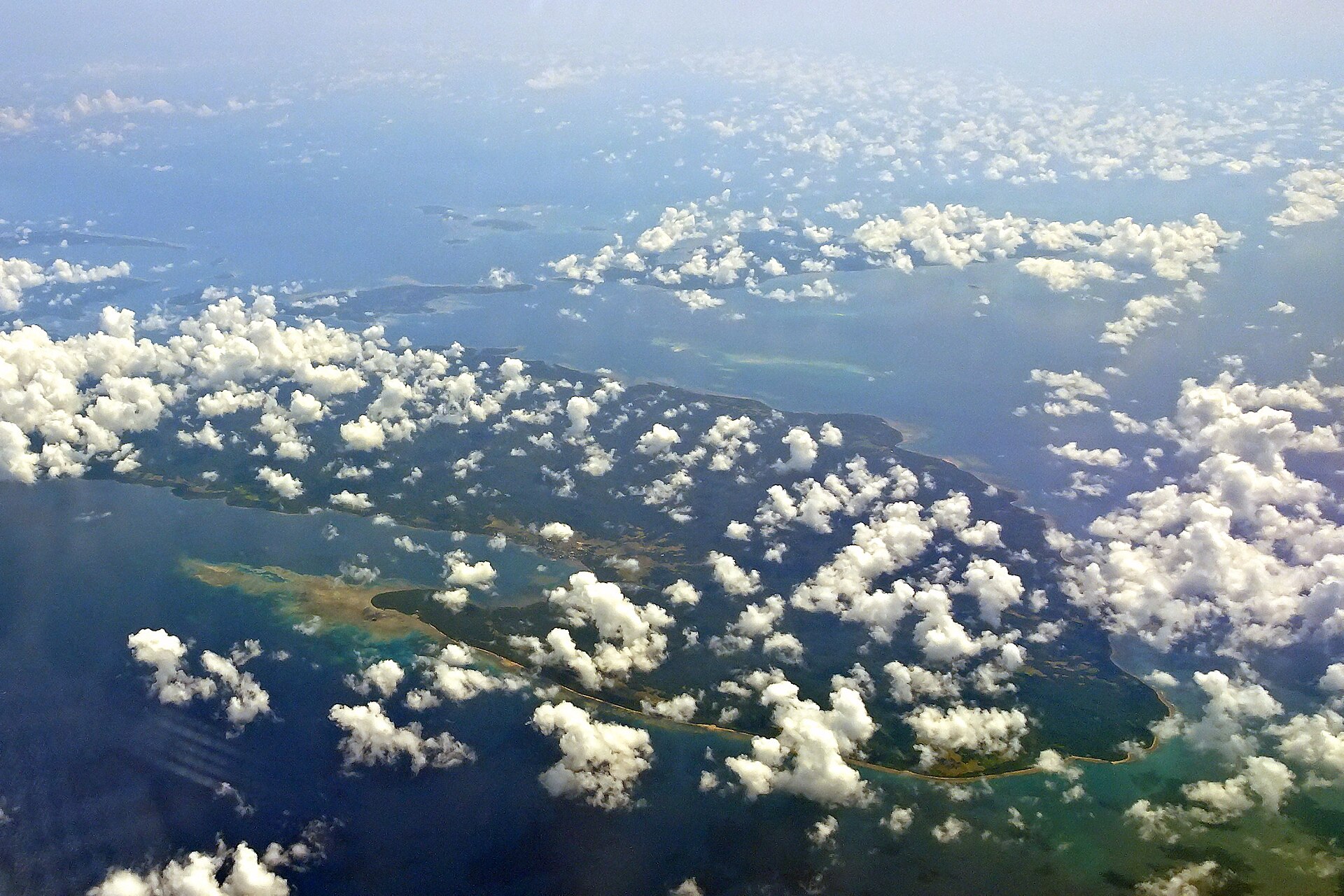
A view of Polillo Island, Quezon.
Photo: P199 · Original photograph · CC BY-SA 4.0. Displayed to fit the frame.
Beyond the species list
A sense of place.
Polillo lies off eastern Luzon, separated from it by the Polillo Strait. It forms the northern side of Lamon Bay and is the largest island of the wider Polillo group.
Landscape & habitats
The island’s position beside a bay and strait gives it a strongly maritime setting. The landscape photograph provides a view of the named island rather than treating the many islands in the surrounding group as a single locality.
Polillo, Burdeos and Panukulan are municipalities on this same island; the Polillo island group includes additional islands.
Geographic sources
Geographic overview checked 7 October 2026. The photograph illustrates a landscape, not a snake observation.
Islands, barriers & evolution
Zoogeography
An eastern satellite of Greater Luzon
Polillo is included in the Greater Luzon historical island complex. That affiliation provides a framework for comparing its animals with Luzon’s eastern lowlands while retaining Polillo’s identity as a separate island today.
A regional relationship is not a complete inventory. The 2024 review warns that the apparent absence of published studies can conceal fieldwork whose results have not yet reached the literature. Gaps in an accessible catalogue should therefore be interpreted as gaps in available evidence, not automatic biological absences.
How to read the historical island groups
During Pleistocene glacial periods, lower sea levels exposed shallow seabeds and joined some present-day islands. Biogeographers call these reconstructed landmasses Pleistocene Aggregate Island Complexes (PAICs). Deep channels continued to separate others. This model helps explain regional similarities, but dispersal, older geology and habitat differences also shaped each fauna.
“Endemic” means restricted to a stated area; a Philippine endemic need not be confined to one island. The account above summarises published regional and local research. It does not add occurrences to the snake index below.
Regional framework: Meneses et al. (2024) ↗Zoogeographic sources · 2
- Sánchez-González, Hosner & Moyle (2015) · Genetic differentiation in Philippine lowland forest birds ↗Greater Luzon and Negros–Panay island membership; bird evidence illustrates variation within regions, not snake occurrences.
- Meneses et al. (2024) · Philippine herpetology, 20 years on ↗Regional framework, Fig. 1; isolation and research gaps. Open-access review, CC0.
Literature checked 7 October 2026. Survey results refer to the dates and areas studied.
Source-backed index
16 species
These are explicit source mentions, not a complete island richness estimate. Fine localities and habitat associations remain separate evidence claims.
Boiga angulata
(PETERS 1861)
Boiga cynodon
(BOIE 1827)
Boiga dendrophila
(BOIE 1827)
Calamaria gervaisii
DUMÉRIL, BIBRON & DUMÉRIL 1854
Coelognathus erythrurus
(DUMÉRIL, BIBRON & DUMÉRIL 1854)
Cyclocorus lineatus
(REINHARDT 1843)
Dendrelaphis marenae
VOGEL & VAN ROOIJEN 2008
Hemibungarus mcclungi
TAYLOR 1922
Hologerrhum philippinum
GÜNTHER 1858
Lycodon muelleri
DUMÉRIL, BIBRON & DUMÉRIL 1854
Malayopython reticulatus
(SCHNEIDER 1801)
Psammodynastes pulverulentus
(BOIE 1827)
Ptyas luzonensis
(GÜNTHER 1873)
Ramphotyphlops cumingii
(GRAY 1845)
Trimeresurus flavomaculatus
(GRAY 1842)
Tropidonophis spilogaster
(BOIE 1827)
A source naming Polillo does not establish occurrence in every municipality, protected area, or habitat on the island.