Island atlas · Landscapes & species
Mindoro
17 species records name Mindoro. Explore their natural history, taxonomic history and distribution sources.
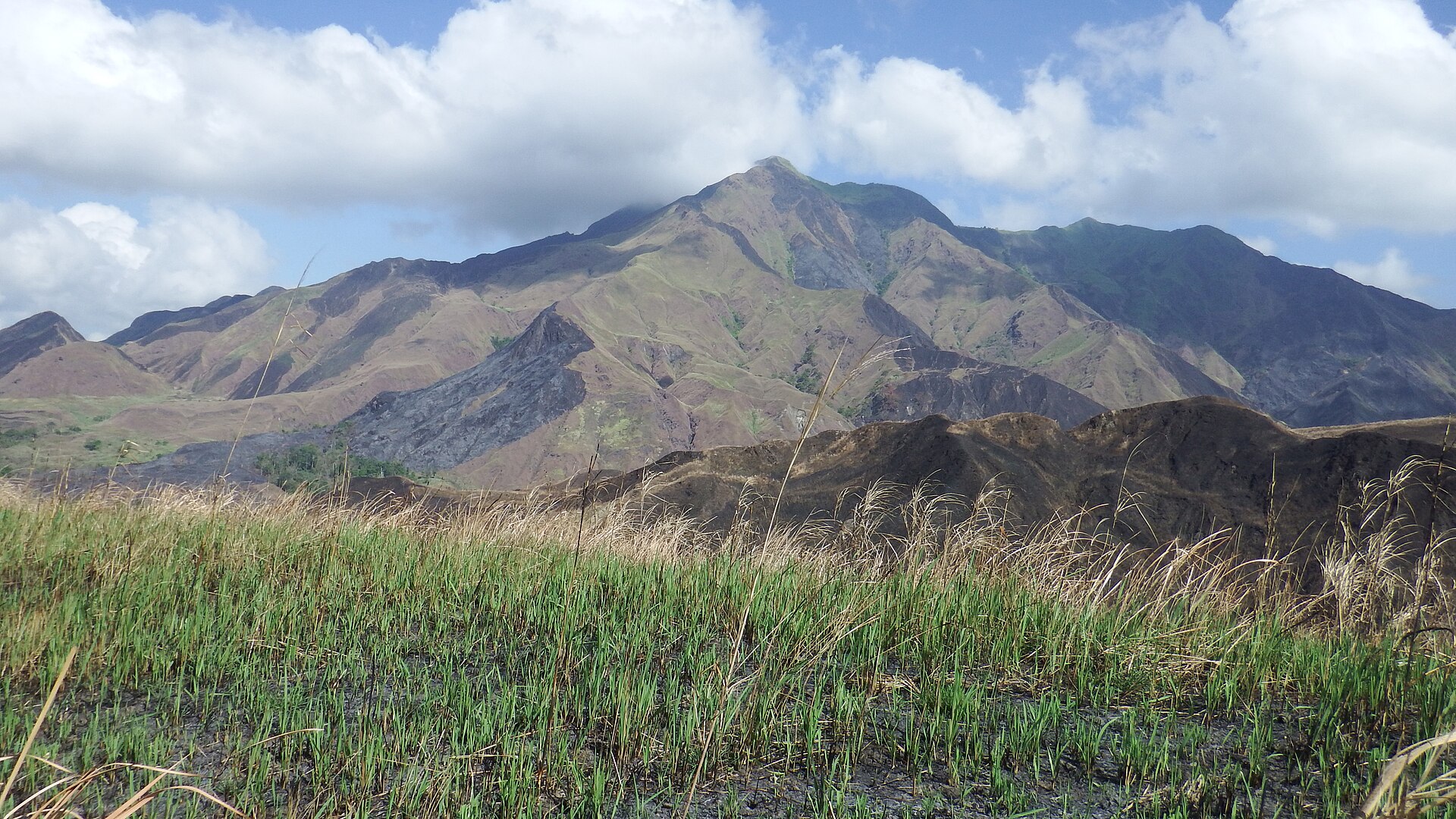
Mount Iglit and its grass-covered slopes, Mounts Iglit–Baco National Park, Mindoro.
Photo: Allan Siquioco · Original photograph · CC BY 3.0. Displayed to fit the frame.
Beyond the species list
A sense of place.
Mindoro lies off southwestern Luzon and northeast of Palawan. It is divided into Oriental and Occidental Mindoro. Mountains dominate much of its relief, with Mount Halcon forming the island’s highest point.
Landscape & habitats
Mounts Iglit–Baco National Park illustrates the contrast between open grasslands and evergreen forest in the island’s interior. Mountain slopes and forest patches give the landscape a different character from the coastal settlements and lowlands.
Geographic sources
Geographic overview checked 7 October 2026. The photograph illustrates a landscape, not a snake observation.
Islands, barriers & evolution
Zoogeography
A distinct faunal region between Luzon and Palawan
Mindoro is recognised as its own major Philippine faunal region. Its position between Luzon and Palawan is useful for orientation, but it should not be pictured as a simple land bridge linking their animals.
The archipelago’s historical framework distinguishes Mindoro from both neighbouring regions. Its mountain habitats add another scale of isolation within the island, and the 2024 review identifies high-elevation forests here among places still requiring more field research. Restricted distributions and incomplete sampling must therefore be considered together.
How to read the historical island groups
During Pleistocene glacial periods, lower sea levels exposed shallow seabeds and joined some present-day islands. Biogeographers call these reconstructed landmasses Pleistocene Aggregate Island Complexes (PAICs). Deep channels continued to separate others. This model helps explain regional similarities, but dispersal, older geology and habitat differences also shaped each fauna.
“Endemic” means restricted to a stated area; a Philippine endemic need not be confined to one island. The account above summarises published regional and local research. It does not add occurrences to the snake index below.
Regional framework: Meneses et al. (2024) ↗Zoogeographic sources · 1
- Meneses et al. (2024) · Philippine herpetology, 20 years on ↗Regional framework, Fig. 1; isolation and research gaps. Open-access review, CC0.
Literature checked 7 October 2026. Survey results refer to the dates and areas studied.
Source-backed index
17 species
These are explicit source mentions, not a complete island richness estimate. Fine localities and habitat associations remain separate evidence claims.
Calamaria alcalai
WEINELL, LEVITON & BROWN 2020
Calamaria gervaisii
DUMÉRIL, BIBRON & DUMÉRIL 1854
Cyclocorus lineatus
(REINHARDT 1843)
Dendrelaphis fuliginosus
GRIFFIN 1909
Dendrelaphis marenae
VOGEL & VAN ROOIJEN 2008
Dryophiops philippina
BOULENGER 1896
Gerrhopilus hedraeus
(SAVAGE 1950)
Hemibungarus calligaster
(WIEGMANN 1835)
Lycodon capucinus
BOIE 1827
Lycodon muelleri
DUMÉRIL, BIBRON & DUMÉRIL 1854
Malayopython reticulatus
(SCHNEIDER 1801)
Naja philippinensis
TAYLOR 1922
Oligodon ancorus
(GIRARD 1858)
Ophiophagus bungarus
SCHLEGEL 1837
Oxyrhabdium leporinum
(GÜNTHER 1858)
Rhabdophis barbouri
(TAYLOR 1922)
Trimeresurus flavomaculatus
(GRAY 1842)
A source naming Mindoro does not establish occurrence in every municipality, protected area, or habitat on the island.