Island atlas · Landscapes & species
Luzon
60 species records name Luzon. Explore their natural history, taxonomic history and distribution sources.
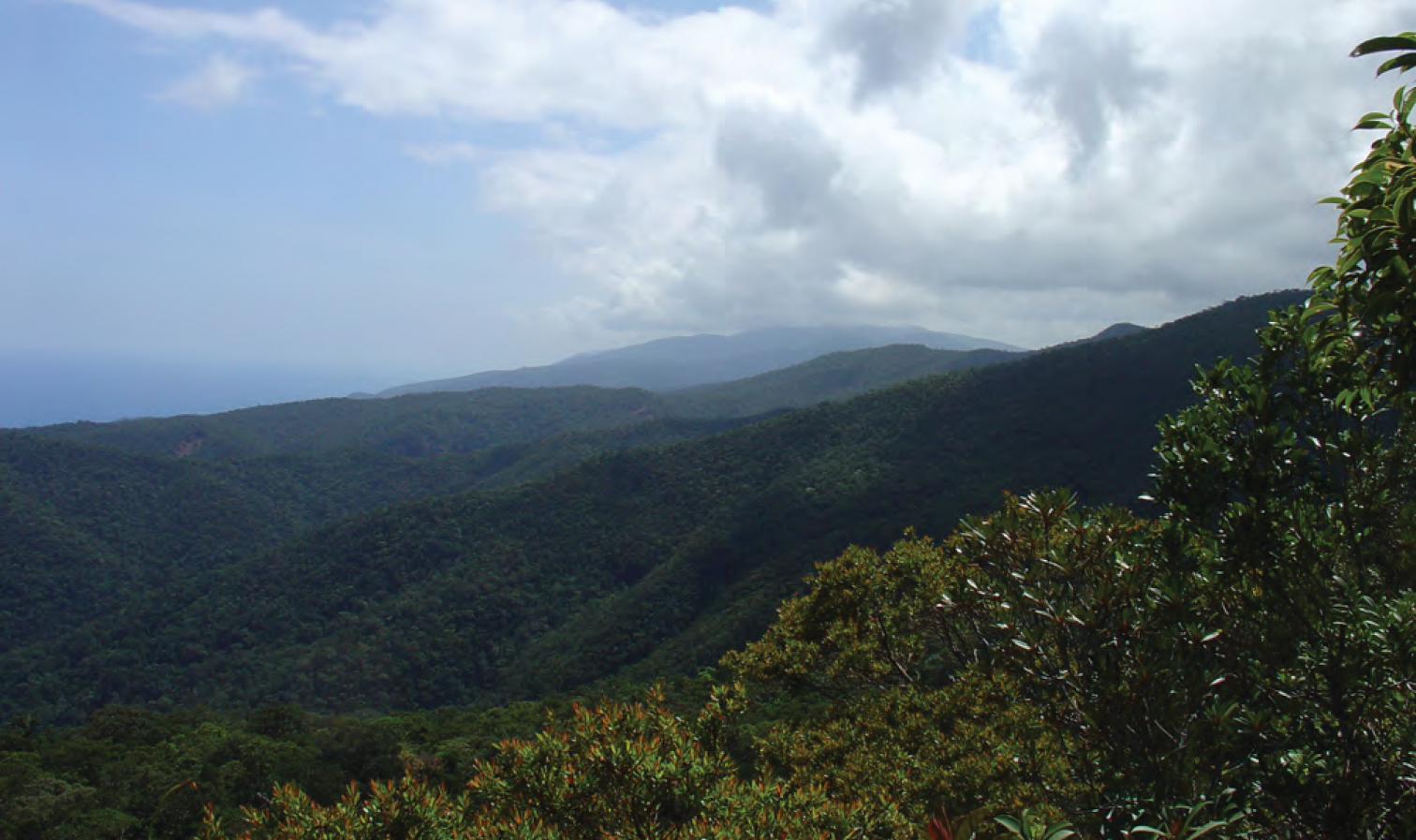
Forest above 1,200 metres near Diddadungan, Palanan, in the northern Sierra Madre of Luzon.
Photo: Brown R, Siler C, Oliveros C, Welton L, Rock A, Swab J, Van Weerd M, van Beijnen J, Rodriguez D, Jose E, Diesmos A · Original photograph · CC BY 3.0. Displayed to fit the frame.
Beyond the species list
A sense of place.
Luzon is the largest island of the Philippines. The same name also describes a much wider administrative island group, but this overview concerns the main landmass, including the country’s capital region.
Landscape & habitats
The Sierra Madre runs along northeastern Luzon and includes extensive mountain landscapes. The photograph shows forest on ultrabasic terrain near Diddadungan in northern Isabela, above 1,200 metres. This is one specific upland setting within a very large and varied island.
Nearby islands such as Polillo and Catanduanes have separate pages; the broader Luzon island-group label is not used to merge their records.
Geographic sources
- Luzon — island and island-group distinction ↗
- ZooKeys — Diddadungan forest photograph and original publication ↗
Geographic overview checked 7 October 2026. The photograph illustrates a landscape, not a snake observation.
Islands, barriers & evolution
Zoogeography
A major faunal region with internal boundaries
Luzon is the core of one of the Philippines’ major historical island complexes. Yet a large continuous island can contain several distinct assemblages: mountains, uplands and the history of its landscapes create geographic structure within the region.
Herpetological comparisons involving the Caraballo, Cordillera and Sierra Madre ranges examine that internal variation. Looking only at Luzon as one unit would conceal the restricted distributions of many mountain and habitat-associated animals.
How to read the historical island groups
During Pleistocene glacial periods, lower sea levels exposed shallow seabeds and joined some present-day islands. Biogeographers call these reconstructed landmasses Pleistocene Aggregate Island Complexes (PAICs). Deep channels continued to separate others. This model helps explain regional similarities, but dispersal, older geology and habitat differences also shaped each fauna.
“Endemic” means restricted to a stated area; a Philippine endemic need not be confined to one island. The account above summarises published regional and local research. It does not add occurrences to the snake index below.
Regional framework: Meneses et al. (2024) ↗Zoogeographic sources · 2
- Gojo Cruz & Afuang (2018) · Zoogeographic significance of the Caraballo Mountain Range ↗Comparisons among Luzon mountain ranges and herpetofaunal regions.
- Meneses et al. (2024) · Philippine herpetology, 20 years on ↗Regional framework, Fig. 1; isolation and research gaps. Open-access review, CC0.
Literature checked 7 October 2026. Survey results refer to the dates and areas studied.
Source-backed index
60 species
These are explicit source mentions, not a complete island richness estimate. Fine localities and habitat associations remain separate evidence claims.
Acrochordus granulatus
(SCHNEIDER 1799)
Acutotyphlops banaorum
WALLACH, BROWN, DIESMOS & GEE 2007
Ahaetulla prasina
(BOIE 1827)
Aplopeltura boa
(BOIE 1828)
Boiga angulata
(PETERS 1861)
Boiga cynodon
(BOIE 1827)
Boiga dendrophila
(BOIE 1827)
Boiga drapiezii
(BOIE 1827)
Boiga philippina
(PETERS 1867)
Calamaria bitorques
PETERS 1872
Calamaria gervaisii
DUMÉRIL, BIBRON & DUMÉRIL 1854
Calliophis philippinus
(GÜNTHER 1864)
Cerberus microlepis
BOULENGER 1896
Cerberus schneiderii
(SCHLEGEL 1837)
Chrysopelea paradisi
BOIE 1827
Coelognathus erythrurus
(DUMÉRIL, BIBRON & DUMÉRIL 1854)
Cyclocorus lineatus
(REINHARDT 1843)
Dendrelaphis luzonensis
LEVITON 1961
Dendrelaphis marenae
VOGEL & VAN ROOIJEN 2008
Dryophiops philippina
BOULENGER 1896
Gerarda prevostiana
(EYDOUX & GERVAIS 1837)
Gerrhopilus hedraeus
(SAVAGE 1950)
Gonyosoma oxycephalum
(BOIE 1827)
Hemibungarus calligaster
(WIEGMANN 1835)
Hologerrhum philippinum
GÜNTHER 1858
Hydrophis atriceps
GÜNTHER 1864
Hydrophis hardwickii
(GRAY 1834)
Hydrophis lamberti
SMITH 1917
Hydrophis ornatus
(GRAY 1842)
Hydrophis platurus
(LINNAEUS 1766)
Hydrophis semperi
GARMAN 1881
Indotyphlops braminus
(DAUDIN 1803)
Laticauda colubrina
(SCHNEIDER 1799)
Laticauda semifasciata
(REINWARDT 1837)
Lycodon capucinus
BOIE 1827
Lycodon dumerilii
(BOULENGER 1893)
Lycodon muelleri
DUMÉRIL, BIBRON & DUMÉRIL 1854
Lycodon solivagus
OTA & ROSS 1994
Lycodon tessellatus
JAN 1863
Malayopython reticulatus
(SCHNEIDER 1801)
Malayotyphlops collaris
(WYNN & LEVITON 1993)
Malayotyphlops luzonensis
(TAYLOR 1919)
Malayotyphlops manilae
(TAYLOR 1919)
Malayotyphlops ruficauda
(GRAY 1845)
Microcephalophis gracilis
(SHAW 1802)
Myersophis alpestris
TAYLOR 1963
Naja philippinensis
TAYLOR 1922
Oligodon ancorus
(GIRARD 1858)
Oligodon modestus
GÜNTHER 1864
Oxyrhabdium leporinum
(GÜNTHER 1858)
Psammodynastes pulverulentus
(BOIE 1827)
Pseudorabdion mcnamarae
(TAYLOR 1917)
Pseudorabdion oxycephalum
(GÜNTHER 1858)
Ptyas luzonensis
(GÜNTHER 1873)
Rhabdophis barbouri
(TAYLOR 1922)
Trimeresurus flavomaculatus
(GRAY 1842)
Tropidolaemus subannulatus
(GRAY 1842)
Tropidonophis dendrophiops
(GÜNTHER 1883)
Tropidonophis spilogaster
(BOIE 1827)
Ophiophagus salvatana
GOWRI SHANKAR, DAS & WÜSTER 2024
A source naming Luzon does not establish occurrence in every municipality, protected area, or habitat on the island.